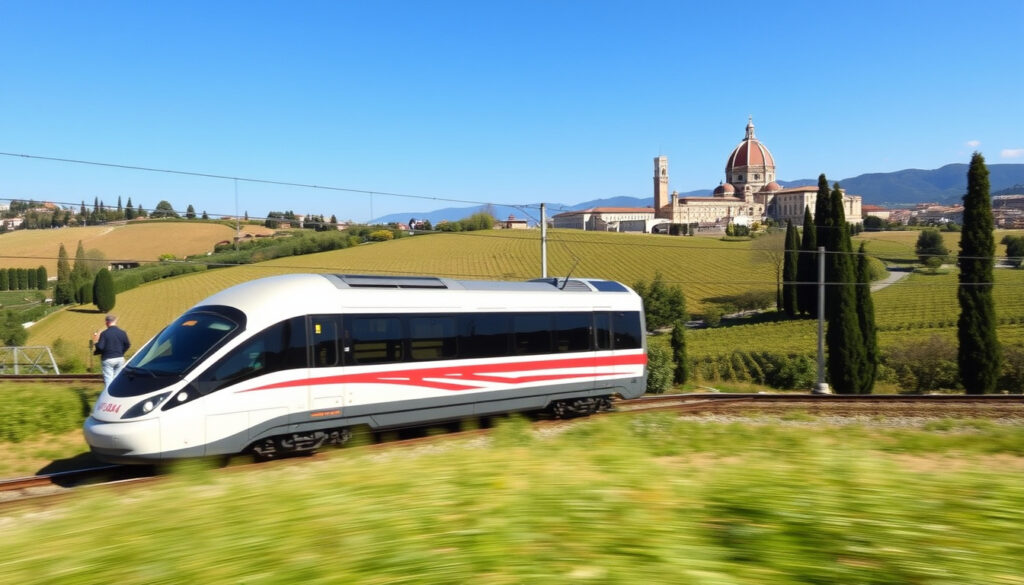
Rome to Florence Train – Schedules, Prices and Times 2025
Traveling between Rome and Florence by train ranks among the most popular journeys in Italy, connecting two of the country’s most iconic cities with remarkable efficiency. High-speed rail services have transformed this corridor into one of Europe’s most frequented transportation routes, offering passengers a comfortable and time-saving alternative to driving or flying.
Both Trenitalia and its private competitor Italo operate multiple daily departures along this 230-261 kilometer stretch, with journey times that can dip below 90 minutes on the fastest services. The route serves as a lifeline for tourists, business travelers, and locals alike, with trains running from early morning until late evening.
This guide provides comprehensive information on schedules, ticket pricing, station details, and practical advice to help travelers plan their Rome to Florence rail journey effectively.
How Long Does the Train from Rome to Florence Take?
The duration of your Rome to Florence train journey depends primarily on which service you choose. High-speed trains operated by Trenitalia and Italo consistently deliver the quickest transit times, while regional services require considerably more time.
Overview: Rome to Florence Train Route
1.5 hrs high-speed
€20-€60
Trenitalia, Italo
276 km
Key Takeaways for Your Journey
- Book early for the cheapest fares — Promotional tickets can drop as low as €14.90 when purchased weeks in advance.
- High-speed direct trains run all day — No connections required; passengers board in Rome and disembark in Florence.
- Three trains per hour on average — Frequent departures make spontaneous travel feasible.
- First departures around 5:20-5:35 AM — Early risers can reach Florence before most tourist attractions open.
- Last trains depart after 10 PM — Evening travelers have flexibility for late departures.
- Avoid regional trains for speed — Standard regional services take 3-4+ hours versus 1.5-2 hours on high-speed.
- Price varies significantly by booking timing — Last-minute tickets can cost 3-4 times more than advance bookings.
Fastest Train Times Comparison
| Fact | Details |
|---|---|
| Fastest Time | 1h 21m (Trenitalia Frecciarossa) |
| Average High-Speed | 1h 32m-2h 15m |
| Avg Price | €29 (based on typical bookings) |
| Daily Trains | 110+ total (up to 78 Trenitalia + 32 Italo) |
| Main Stations | Roma Termini / Firenze SMN |
| Distance Covered | 230-261 km depending on route |
For the fastest possible journey, seek out Trenitalia’s Frecciarossa services, which have recorded journey times as brief as 1 hour and 21 minutes between Roma Termini and Firenze Santa Maria Novella.
Rome to Florence Train Cost and Tickets
Ticket prices for the Rome to Florence route span a wide range, influenced by booking advance notice, travel class, time of day, and demand levels. Understanding these factors can help travelers secure the best deals on their journey.
Understanding Ticket Pricing
The most economical fares appear when booking well in advance. Rail Europe reports promotional prices as low as US$3.60 (approximately €14.90) for Trenitalia services, while Italo’s lowest promotional fares match this threshold. However, these rock-bottom prices disappear quickly as trains fill up.
Travelers booking 30 days ahead typically encounter prices around US$40, while those purchasing within a week of travel may pay US$42.50 or more. Standard pricing for high-speed services generally falls between €35-75 or US$40-55 depending on the operator and class selected.
Where to Purchase Tickets
Direct booking through official operator websites offers advantages including no service fees and best-price guarantees. Italo’s website and Trenitalia’s platform provide direct access to all available fares and real-time availability.
Third-party aggregators like Trainline and Rome2Rio also sell tickets for these routes, with Trainline listing fares starting from US$13.41 for certain departures.
Discount Programs Available
- Italo Young — Offers up to 70% off for passengers aged 14-29 years old.
- Trenitalia under 30 — Discounted fares available for travelers under 30.
- Trenitalia over 60 — Senior discounts for passengers aged 60 and above.
- Advance purchase rewards — The earlier you book, the more you save on standard services.
High-speed train fares consistently outperform regional services on value, even at higher absolute prices, because the time saved (2+ hours) outweighs the cost difference. Regional trains, while cheaper, take 3-4+ hours versus 1.5-2 hours for high-speed.
Rome to Florence Train Schedules and Frequencies
The Rome to Florence corridor benefits from exceptionally frequent service, with trains operating from early morning until late evening. This frequency makes the route highly accessible regardless of when travelers need to depart.
Daily Schedule Overview
According to operator schedules and aggregator data, the first high-speed departures leave Rome between approximately 5:20 and 5:35 AM from Roma Termini and Roma Tiburtina stations. The last trains of the evening depart around 10:35 PM, with some services continuing until nearly 9 PM from certain stations.
Italo operates 32 direct daily trains on this route, each completing the journey in 1 hour and 25 minutes. Trenitalia’s Frecciarossa and Frecciargento services comprise the majority of remaining departures, bringing the total daily count to approximately 110 trains.
Frequency and Availability
On average, passengers can expect up to three trains per hour throughout most of the day. This level of service means that travelers rarely need to plan their day around specific departures—they can simply arrive at the station and expect a train within 20 minutes.
The high-speed advantage is particularly pronounced during peak travel times. While regional trains require patience and offer no time savings, high-speed services zip through the Tuscan landscape without stops, delivering passengers swiftly to their destination.
Checking Current Schedules
While current data reflects standard operations with no major 2025-specific changes noted in official sources, travelers should verify real-time schedules before their trip. Official booking tools on italotreno.com and trenitalia.com provide the most up-to-date departure information.
Departure and Arrival Stations for Rome-Florence Trains
Understanding which stations serve this route helps travelers plan their ground transportation and accommodation choices. Both cities offer multiple station options, though one clearly dominates for high-speed services.
Rome Departure Stations
Roma Termini serves as the primary departure point for high-speed trains to Florence. As Rome’s main railway hub, Termini connects to the city’s metro system and numerous bus routes, making it accessible from virtually anywhere in the capital.
Roma Tiburtina handles a significant portion of Italo departures and some Trenitalia services. Located on the eastern side of the city, Tiburtina offers an alternative for travelers staying in that area and features excellent connections to Rome’s metro network.
Occasionally, Fiumicino Airport sees two daily Trenitalia departures that continue directly to Florence, providing a convenient option for travelers arriving by air who want to continue immediately to Tuscany.
Florence Arrival Stations
Firenze Santa Maria Novella (SMN) receives the overwhelming majority of high-speed trains from Rome. Located in the city center, this station sits within walking distance of major attractions, hotels, and restaurants, making it ideal for tourists.
A small number of Trenitalia services—approximately six daily—stop at Campo di Marte station instead. This station serves some residential neighborhoods and offers connections to local transport, though Santa Maria Novella remains the preferred arrival point for most visitors.
When booking accommodations in Florence, verify that your hotel is accessible from Santa Maria Novella. This station’s central location means most tourist areas lie within a 20-minute walk or a short tram ride away.
Trenitalia vs Italo: Which Operator for Rome to Florence?
Two operators compete on the Rome to Florence route, each offering distinct advantages. Choosing between them depends on budget constraints, scheduling preferences, and personal comfort priorities.
Operator Comparison at a Glance
| Category | Trenitalia | Italo |
|---|---|---|
| Fastest Journey | 1 hour 21 minutes | 1 hour 25 minutes |
| Starting Price | US$3.60 (promotional) | €14.90 (promotional) |
| Daily Trains | ~78 (of 110 total) | 32 direct |
| Service Types | Frecciarossa, Frecciargento | Italo Evo, Italo AV |
| Route Distance | 230 km | 261 km |
Choosing the Right Service
Trenitalia holds the advantage in raw speed, with its flagship Frecciarossa services achieving the fastest recorded times of 1 hour 21 minutes. The state-owned railway also operates more daily departures, providing greater scheduling flexibility.
Italo, the private competitor, counters with competitive pricing and a reputation for modern fleet amenities. For travelers under 30, Italo Young pricing can deliver savings up to 70% off standard fares, making this operator particularly attractive to younger visitors.
Cost differences between operators remain minimal at standard pricing levels. Both companies adjust fares based on demand, and the cheapest option often depends on how far in advance you book rather than which company you choose.
Practical Considerations
- No major cost differences exist between operators for comparable services.
- High-speed always beats regional trains regardless of which company operates them.
- Both offer loyalty programs for frequent travelers on Italian rail routes.
- Booking directly with either operator eliminates service fees.
The Evolution of High-Speed Rail on This Corridor
The Rome to Florence rail corridor holds significant historical importance in Italian transportation, having undergone dramatic transformation over the past two decades. Understanding this evolution provides context for why this route now ranks among Europe’s most efficient. Travelers seeking comprehensive planning resources may find value in reviewing additional travel guides for Italian destinations to build complete Italian itineraries.
- 2009 — Trenitalia launches Frecciarossa high-speed service, reducing journey times below 1 hour 30 minutes for the first time.
- 2012 — Italo enters the market as the first private high-speed operator in Italy, introducing competition and driving service improvements.
- 2013-2018 — Fleet modernization continues as both operators introduce new train sets with enhanced amenities, WiFi, and improved comfort.
- 2019-Present — Service frequency increases to current levels of 110+ daily departures, with journey times stabilizing around 1h 20-25 minutes for the fastest services.
Before high-speed services debuted, the journey between Rome and Florence took 3-4 hours by conventional trains. The introduction of Frecciarossa and later Italo services compressed this to under 90 minutes, fundamentally changing travel patterns between these cities.
What We Know and What Remains Uncertain
While extensive information exists about the Rome to Florence train route, travelers should distinguish between established facts and areas where variables apply.
| Established Information | Variable Factors |
|---|---|
| Direct trains run hourly throughout the day with no required connections. | Real-time pricing fluctuates based on demand, booking timing, and promotional availability. |
| High-speed services take 1h 20-25 minutes on the fastest Frecciarossa departures. | Specific train availability varies by day of week and season; some services may be added or removed. |
| Two primary operators serve this route with comparable service levels. | Platform assignments at departure stations change and must be confirmed on the day of travel. |
| Roma Termini to Firenze SMN represents the main station pairing for this route. | Minor delays occasionally occur during peak travel periods or due to operational factors. |
Why This Route Matters for Italian Travel
The Rome to Florence rail corridor represents more than just a transportation link—it embodies Italy’s commitment to sustainable, efficient travel between its most significant cultural centers. The route connects the nation’s capital with the cradle of the Renaissance, facilitating the movement of millions of tourists, students, and business travelers annually.
From an environmental perspective, high-speed rail offers a substantially lower carbon footprint compared to domestic flights or private vehicles for this distance. The route’s popularity has encouraged continued investment in infrastructure, benefiting both regional connectivity and broader European rail networks.
For visitors to Italy, mastering this route opens possibilities for efficient multi-city itineraries. A day trip from Rome to Florence becomes entirely feasible given the short journey time, allowing travelers to maximize their experiences without sacrificing comfort or accumulating exhaustion from extended road travel.
“The high-speed rail connection between Rome and Florence demonstrates how modern infrastructure can bring Italy’s great cities closer together while preserving the distinct character of each destination.”
Summary: Planning Your Rome to Florence Train Journey
The train remains the optimal choice for traveling between Rome and Florence, offering a compelling combination of speed, comfort, and frequency. With journey times as brief as 1 hour 21 minutes on Trenitalia’s Frecciarossa and over 110 daily departures, spontaneous travel requires minimal advance planning.
For the best fares, book through official operator websites or trusted aggregators several weeks ahead. Students and young travelers should investigate Italo Young discounts, while seniors may find appropriate offers through Trenitalia. Regardless of which operator you choose, high-speed services deliver consistent value that regional alternatives simply cannot match.
Travelers seeking comprehensive planning resources may find value in reviewing additional travel guides for Italian destinations to build complete Italian itineraries.
Frequently Asked Questions
Is there a direct train from Rome to Florence?
Yes, both Trenitalia and Italo operate direct high-speed trains between Rome and Florence with no required connections. All high-speed services travel non-stop or with minimal intermediate stops, typically completing the journey in 1h 20-25 minutes.
How frequent are Rome to Florence trains?
Up to three trains per hour operate on this route, totaling approximately 110+ daily departures. The first trains depart around 5:20-5:35 AM and the last services leave after 10 PM, making same-day round trips entirely feasible.
What is the cheapest way to travel from Rome to Florence by train?
Booking promotional fares 30+ days in advance yields the lowest prices, with promotional tickets available from approximately €14.90. Using youth or senior discount programs through Italo Young or Trenitalia can provide additional savings up to 70% off standard fares.
Which station in Rome should I use for trains to Florence?
Roma Termini serves as the primary departure station for high-speed trains to Florence, with Roma Tiburtina also handling significant Italo departures. Fiumicino Airport offers two Trenitalia services daily for travelers arriving by air.
Is Trenitalia or Italo better for Rome to Florence?
Both operators offer comparable service quality, though Trenitalia holds a slight speed advantage with 1h 21m fastest times versus Italo’s 1h 25m. Price differences are minimal at standard fares, though Italo Young discounts make Italo more attractive for travelers aged 14-29.
How far in advance should I book Rome to Florence train tickets?
Booking 2-4 weeks ahead typically balances availability with price. While promotional fares appear up to 30 days in advance, booking too early may limit flexibility if plans change. Last-minute bookings risk higher prices and limited availability during peak periods.
Can I take luggage on trains from Rome to Florence?
Yes, all high-speed trains accommodate luggage without additional fees. Standard luggage allowances apply, with larger bags typically stored in dedicated overhead racks or at car ends. No reservation is required for luggage space on Italian high-speed services.
More related posts
 5 Letter Words Ending in O: Lists for Wordle & Games
 Circle Internet Group Stock: CRCL Price, News & Buy Analysis
 Cogeco Customer Service: Phone, Hours, Contact Guide
 Canadian Dental Care Plan: Eligibility, Application & Coverage
 2300 USD to CAD: Live Converter, Rates & 2026 Forecasts
 Ash vs Evil Dead: Cancellation, Seasons & Where to Watch
 John C. McGinley: Real Name, Family, Scrubs Reboot & Advocacy
 Cast of That ’70s Show: Stars, Roles & Where They Are Now