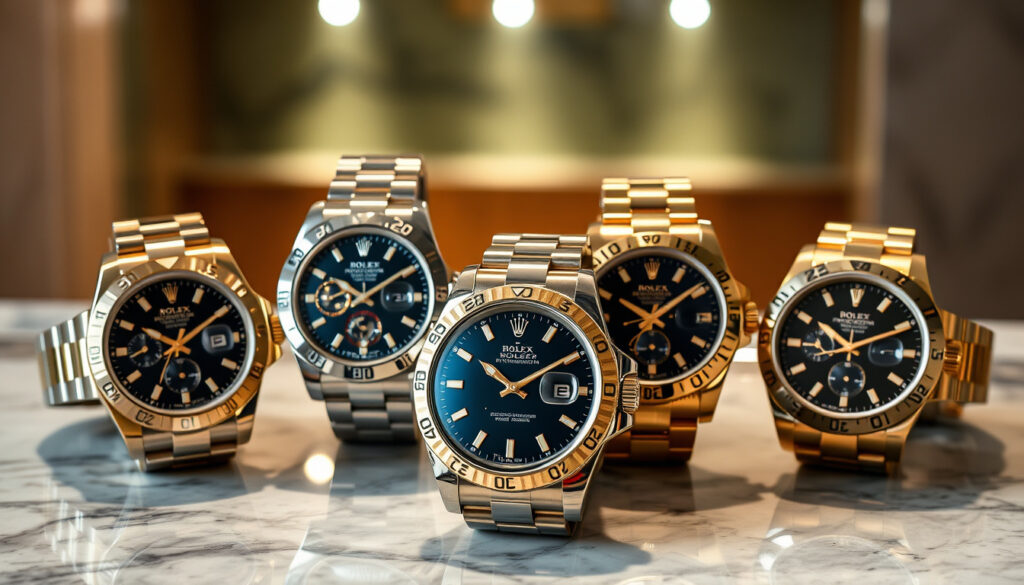
Rolex Watches for Men – 2025 Guide to Top Models and Prices
The Rolex men’s collection represents one of the most coveted categories in luxury timepieces. From the legendary Submariner dive watch to the sophisticated Day-Date President, these Swiss-made instruments combine precision engineering with timeless design. Understanding which models best suit different lifestyles, budgets, and wrists can help narrow the selection process in 2025.
Men’s Rolex watches span a remarkable price spectrum, ranging from entry-level Oyster Perpetual models to precious metal Daytonas commanding six-figure sums. The brand’s commitment to in-house movements, robust Oystersteel cases, and rigorous testing protocols has cemented its reputation among collectors and first-time buyers alike. This guide examines the standout models, current pricing landscape, investment potential, and authentication essentials for prospective purchasers.
What Are the Best Rolex Watches for Men?
The 2025 men’s collection features several standout performers that consistently appear at the top of expert recommendations. These models share common attributes: updated movements with 70-hour power reserves, Oystersteel or precious metal construction, and versatile aesthetics suitable for both professional and casual settings.
Submariner, Datejust, Explorer, Daytona
$6,000 – $115,000+
Oystersteel, Perpetual movement, Waterproof
Daily wear, Diving, Dress occasions
The Submariner, particularly the reference 126610LN, remains the benchmark for sporty elegance. Its 300-meter water resistance, Cerachrom bezel, and Caliber 3235 movement make it equally suitable for professional diving and corporate environments. The Datejust offers the most versatile entry point with 36mm and 40mm options in Oystersteel, featuring the signature fluted bezel and Cyclops lens that define classic Rolex styling.
For adventurers, the Explorer delivers rugged reliability with 100-meter water resistance and the option of Caliber 3285 in the Explorer II variant. Travelers gravitate toward the GMT-Master II, which tracks dual time zones through its rotating Cerachrom bezel. The Cosmograph Daytona, especially the “Panda” dial reference 126500LN, continues to dominate collector attention with its tachymeter bezel capable of measuring speeds up to 400 kilometers per hour.
- Steel sports models retain value most reliably, with Submariner and Daytona leading appreciation trends
- Case sizes range from 36mm to 42mm; 40mm fits most wrist types comfortably
- Current movements like Caliber 3235 and 3285 offer 70-hour power reserves
- Precious metal variants retail from $48,000 but trade significantly higher on secondary markets
- Waitlists at authorized dealers commonly extend 12-24 months for popular steel references
- Service costs range from $800 to $1,500 at certified Rolex service centers
| Model | Case Size (mm) | Retail Price (USD) | Water Resistance |
|---|---|---|---|
| Submariner (126610LN) | 41 | $9,000–$11,000 | 300 meters |
| Datejust (36mm steel) | 36 | $7,000–$9,000 | 100 meters |
| Explorer | 39 | $7,000–$9,000 | 100 meters |
| GMT-Master II | 40 | $10,000–$14,000 | 100 meters |
| Daytona (steel) | 40 | $15,000+ | 100 meters |
How Much Do Rolex Watches for Men Cost?
Retail pricing for men’s Rolex watches reflects both the complexity of manufacture and sustained demand that typically exceeds supply. Steel sports models form the core of the collection, with prices clustering between $7,000 and $15,000 at authorized dealers. However, the secondary market frequently operates at substantial premiums above retail.
Entry-Level Options Under $10,000
The Datejust in 36mm steel configuration represents the most accessible new Rolex for men, with retail prices starting near $7,000. The Explorer follows closely as an affordable rugged option, while older Oyster Perpetual references trade on the gray market for approximately $6,000 to $9,000 depending on condition and reference year. Pre-owned Datejust and Explorer models occasionally surface below retail, though availability remains unpredictable.
Purchasing from secondary sources can provide access to discontinued references or immediate availability, but buyers should verify authenticity through serial number checks and trusted verification services.
Mid-Tier Investment Pieces
The Submariner occupies the $9,000 to $11,000 retail bracket, though waitlists at authorized dealers often push buyers toward secondary market purchases at $12,000 or higher. GMT-Master II references like the “Pepsi” bezel variant similarly command premiums, with retail around $10,000 to $14,000 translating to secondary market prices frequently exceeding $18,000 for rare dial configurations.
Premium and Precious Metal References
Gold and platinum references represent the upper echelon of the men’s collection. The Day-Date in yellow gold or platinum retail from $35,000 to $48,000, while gold Daytona variants command retail prices exceeding $48,000. These precious metal pieces trade at extraordinary premiums on secondary markets, with gold Daytonas reportedly exchanging hands near $115,000 according to marketplace data from specialized watch dealers.
Are Rolex Watches for Men a Good Investment?
Steel sports models have historically demonstrated the strongest investment characteristics within the Rolex lineup. The Submariner frequently appears in financial planning discussions as a “timeless investment” capable of maintaining value through market fluctuations. Collectors note that certain references, particularly the Daytona “Panda” and GMT-Master II “Pepsi,” outperform due to deliberate rarity in production and sustained collector demand.
Secondary market premiums of 20 to 50 percent above retail represent the norm for highly sought-after references. However, purchasing at peak premiums introduces risk if production increases or market preferences shift. Established collectors advise prioritizing personal enjoyment over pure appreciation potential, as carrying costs, insurance, and transaction fees can erode theoretical gains.
How to Tell if a Rolex Watch for Men is Real?
Authenticating a Rolex requires attention to manufacturing details that counterfeiters struggle to replicate consistently. The rehaut—the inner ring between dial and crystal—should feature crisp, properly aligned engraving of the crown logo at the 6 o’clock position. Fakes often display rough edges, misalignment, or inconsistent lettering depth.
Verification Checklist
Genuine Rolex crystals bear a laser-etched crown symbol at the 6 o’clock position, visible only under magnification. The Cyclops lens magnifies the date exactly 2.5 times with perfect clarity, while replica magnifiers frequently exhibit distortion or incorrect magnification ratios. Weight provides another indicator: authentic Rolex cases feel substantially heavier than typical fakes due to solid Oystersteel or precious metal construction.
Legitimate Rolex references display serial and model numbers between the lugs at the 6 o’clock position on the bracelet end. These numbers should correspond to manufacturer databases accessible through authorized dealers or certified pre-owned retailers.
Where to Purchase Safely
Authorized dealers provide the most straightforward path to guaranteed authenticity, complete with the transferable five-year Rolex warranty. Reputable pre-owned specialists like established auction houses and dedicated watch retailers offer secondary market purchases with authentication guarantees. Deals significantly below market value should raise immediate concerns, as sophisticated counterfeits frequently target the sub-$5,000 price segment.
Unverified online marketplaces and peer-to-peer transactions carry elevated risk of encountering counterfeit merchandise. Professional authentication services provide additional security for significant purchases.
A Brief History of Rolex Watches for Men
The foundation for today’s men’s collection traces to Hans Wilsdorf’s establishment of Rolex in 1905, when the company focused on producing reliable wristwatches to rival pocket watches. The 1926 introduction of the Oyster case brought waterproof protection to the forefront of watchmaking innovation.
- 1905 – Rolex founded in London by Hans Wilsdorf; initial focus on reliable movements
- 1926 – Oyster case introduced, providing the first waterproof wristwatch protection
- 1953 – Submariner launched, establishing the dive watch category
- 1956 – Day-Date introduced with day display in 26 languages
- 1963 – Cosmograph Daytona released for motorsport timing
- 2015 – New-generation Caliber 3235 with 70-hour power reserve announced
- 2023-2025 – Ceramic Cerachrom bezels expanded across sports models
What Remains Clear and Uncertain
| Established Facts | Uncertain Information |
|---|---|
| Official retail prices from authorized dealers | Secondary market price fluctuations |
| Movement specifications and power reserves | Actual waitlist duration at specific dealers |
| Water resistance ratings and testing protocols | Production numbers for limited editions |
| Five-year transferable warranty terms | Future reference discontinuations |
| Caliber reference numbers and maintenance intervals | Pre-owned market condition assessments |
The Men’s Watch Market Context
Rolex maintains dominant market share within the luxury Swiss watch segment, commanding particular strength in the men’s sports watch category. Competitors including Omega, Audemars Piguet, and Patek Philippe offer alternative propositions, but Rolex’s combination of in-house production, accessible service network, and collector community engagement creates distinctive market positioning. Descobreix la millor selecció de motocicletes de gamma alta per a homes a motocicletes de gamma alta per a homes.
Men’s preferences increasingly favor versatile references capable of transitioning between professional and casual environments. The Datejust and Submariner exemplify this trend, with their balanced proportions and refined finishing suitable for boardrooms and weekend activities alike. Size considerations factor prominently, with 36mm to 40mm cases representing the mainstream preference while 42mm references appeal to those seeking bolder presence.
The Submariner tops recommendations across major watch publications for its combination of versatility, durability, and investment characteristics.
— Expert consensus from Hodinkee, WatchTime, and specialized collector forums
Expert Perspectives and Sources
Industry publications including Hodinkee and specialized watch blogs provide ongoing coverage of model updates, market trends, and collector sentiment. These sources consistently cite the Submariner’s 5/5 rating for versatility and durability across comparison reviews, while the Daytona receives top marks for prestige and collector appeal due to deliberate scarcity in production.
The Daytona “Panda” and GMT-Master II “Pepsi” outperform due to their rarity and sustained collector demand.
— Market analysis from specialized watch retailers
Rolex’s official communications and authorized dealer networks represent primary sources for retail pricing, warranty terms, and specification details. Secondary market data from auction results and trusted pre-owned retailers supplement official information, though buyers should expect variation based on condition, completeness, and market timing.
Summary: Choosing Your First Rolex
Selecting a Rolex men’s watch in 2025 requires balancing budget against intended use, investment considerations, and availability constraints. The Datejust and Explorer offer the most accessible entry points under $10,000 retail, while the Submariner provides the benchmark combination of sporty capability and everyday wearability. Travelers benefit from GMT-Master II functionality, and serious collectors continue gravitating toward Daytona references despite substantial premiums.
Prioritizing purchases through authorized dealers ensures warranty coverage and authentication confidence, though trusted pre-owned specialists provide viable alternatives for those willing to verify references independently. Regardless of selection, the combination of Swiss precision engineering, enduring brand prestige, and robust resale characteristics makes any quality Rolex a meaningful addition to a collection. For additional guidance on luxury vehicle investments, explore our premium providers guide.
Frequently Asked Questions
What sizes do Rolex watches come in for men?
Men’s Rolex watches typically range from 36mm to 42mm cases. The 36mm Datejust and 39mm Explorer suit smaller wrists, while 40mm references like the Submariner and GMT-Master II fit most wearers comfortably.
What is the warranty on Rolex men’s watches?
Rolex provides a five-year transferable warranty on all new watches purchased from authorized dealers. This coverage applies to manufacturing defects and is honored at any certified Rolex service center worldwide.
Which Rolex is best for small wrists?
The 36mm Datejust and 39mm Explorer represent the best options for men with smaller wrists. These proportions provide balanced visual weight without overwhelming the wrist, and the Oyster bracelet offers adjustment flexibility.
How often should a Rolex be serviced?
Rolex recommends service intervals of approximately 10 years for regular wear. Service costs range from $800 to $1,500 at certified service centers, including movement cleaning, lubrication, and water resistance verification.
What is the most popular Rolex for men?
The Submariner consistently ranks as the most popular men’s Rolex, combining iconic design, professional dive capabilities, and versatile styling suitable for any occasion. The Datejust follows as the preferred choice for dressier environments.
Can Rolex watches be worn daily?
All Rolex watches are engineered for daily wear, with Oystersteel models offering particular durability. The Oyster case provides water resistance from 100 to 300 meters depending on reference, and modern calibers feature antimagnetic properties.
More related posts
 Johnny Gaudreau Death: Crash, Legal Case, and Family Aftermath
 Anil Kapoor: Age, Family, Career, Net Worth & Health
 Moist Critical: Biography, Fame, Net Worth, Relationship Status
 Spider-Man: Far From Home – Streaming, Connections & Box Office
 Foods High in B12 – Top Sources Ranked by mcg
 Gold Price Per Gram in Ireland: Live EUR Rates
 How to Stop Leg Cramps Immediately: Quick Relief & Prevention