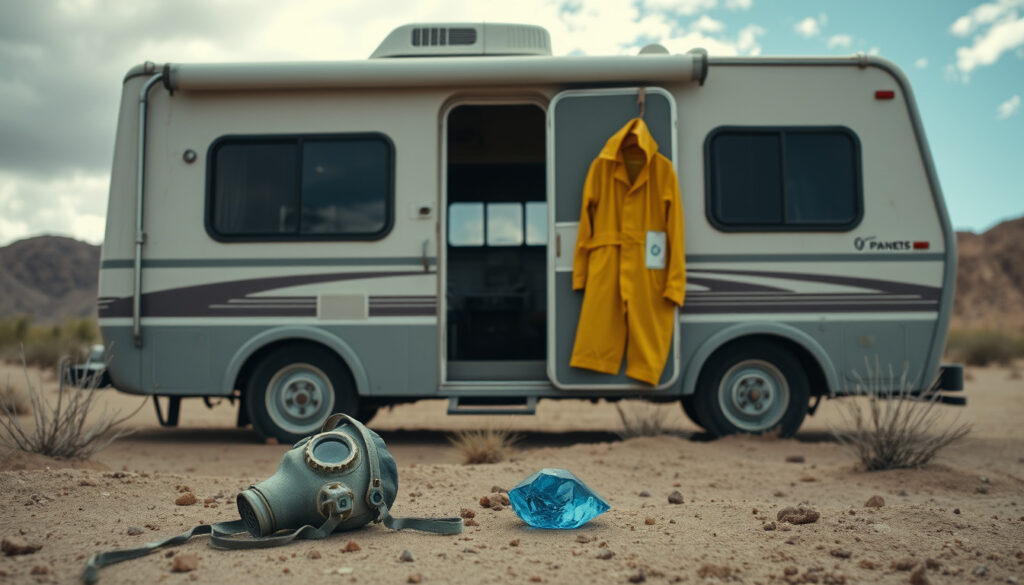
Breaking Bad Jesse: Complete Character Analysis and Fate
Few characters in TV history have carried as much weight as Jesse Pinkman. Introduced as a reckless small-time dealer, he slowly reveals a conscience that makes him the most human figure in Breaking Bad.
Portrayed by: Aaron Paul ·
Number of seasons: 5 ·
Character status: Alive (survives series) ·
First appearance: Season 1, Episode 1 ·
Last appearance: El Camino (2019) ·
Occupation: Meth cook, dealer
Quick snapshot
- Starts as a small-time meth dealer (CharacTour – character reference)
- Evolves into a conflicted partner of Walt (Factual America – analysis)
- Ends as a survivor seeking redemption (SlashFilm – editorial)
- Walter White – teacher, mentor, eventual nemesis (SlashFilm) (YouTube – character analysis)
- Jane Margolis – love and tragic loss (YouTube – character analysis)
- Andrea Cantillo – guilt and responsibility (Taylor Tailored – character study)
- Suffers from PTSD after witnessing deaths (YouTube – breakdown)
- Struggles with substance abuse (CharacTour)
- Experiences severe guilt and depression (Factual America)
- Survives the series finale (SlashFilm)
- Escapes captivity by neo-Nazis (Factual America)
- Continues his story in El Camino (2019) (Taylor Tailored)
Six key facts about Jesse Pinkman, one pattern: his transformation is measured in loss and survival, not triumph.
| Label | Value |
|---|---|
| Full name | Jesse Bruce Pinkman |
| Portrayed by | Aaron Paul |
| Occupation | Meth cook, dealer |
| Status | Alive |
| First appearance | Pilot (Season 1, Episode 1) |
| Last appearance | El Camino: A Breaking Bad Movie (2019) |
What happened to Jesse on Breaking Bad?
Jesse’s journey from small-time dealer to fugitive
- Season 1: Jesse is a small-time dealer operating under the alias “Cap’n Cook” (CharacTour – character profile)
- Season 2: He falls into a relationship with Jane Margolis; her death triggers his first major spiral (Taylor Tailored – character breakdown)
- Season 3: Jesse kills Gale Boetticher under Walt’s coercion, a turning point that cements his guilt (SlashFilm – analysis)
The implication: each season tightens a noose around Jesse’s humanity, and the murders he commits—or is forced to commit—leave him psychologically fractured.
Key events leading to his escape
- Season 4: Walt poisons Brock Cantillo to manipulate Jesse, destroying any remaining trust (Factual America – arc analysis)
- Season 5: Jesse betrays Walt, is captured by Jack’s neo-Nazi gang, and forced to cook meth in captivity (SlashFilm)
- Series finale (“Felina”): Jesse escapes from the compound, driving away screaming in cathartic release (Taylor Tailored)
His fate in El Camino
- Jesse kills Todd Alquist to free himself and retrieve his hidden money (Factual America)
- He evades police with help from his old friends Badger and Skinny Pete (CharacTour)
- The final shot shows him driving toward Alaska, starting a new life under the name “Mr. Driscoll” (Taylor Tailored)
Why this matters: Jesse’s ending is intentionally ambiguous—he escapes, but his trauma is never cured. The film refuses to give him a clean slate.
Why did Jesse betray Walt?
Jesse’s growing disillusionment with Walt
- Walt consistently treats Jesse as disposable, using him as a pawn in drug deals and power plays (SlashFilm – relationship analysis)
- Jesse begins to see Walt as a monster after witnessing his willingness to let people die, including Jane (YouTube – character study)
- By Season 5, Jesse no longer believes Walt’s justifications; he views him as pure ambition disguised as family imperative (Factual America)
The poisoning of Brock and its impact
- Walt poisons Brock, the young son of Jesse’s girlfriend Andrea, to turn Jesse against Gus Fring (Taylor Tailored – plot breakdown)
- When Jesse discovers the truth, he realizes Walt has been systematically destroying everything he loves (SlashFilm)
- The betrayal is total: Walt used Jesse’s empathy to commit a crime against a child (Factual America)
Jesse chooses to betray Walt not out of revenge, but out of a moral awakening: he can no longer pretend Walt is anything but a predator. His own guilt for enabling Walt drives him to cooperate with the DEA.
Walt’s manipulation and lies
- Walt gaslights Jesse repeatedly, claiming Brock’s poisoning was the work of Gus (YouTube – scene analysis)
- He even sends Jesse to a rehab facility to manipulate his guilt over Jane’s death (Taylor Tailored)
- Jesse’s eventual betrayal is a direct consequence of Walt’s refusal to treat him as anything more than a tool (SlashFilm)
The catch: Jesse’s betrayal is also a betrayal of himself—he has to admit that everything he built with Walt was built on lies.
Who was the saddest death in Breaking Bad?
Jane Margolis and its effect on Jesse
- Jane’s overdose is arguably the most tragic because of its immediate aftermath: Walt watches her die and does nothing (SlashFilm – weighted scene analysis)
- Jesse is devastated, blaming himself for introducing her to heroin (YouTube – character reaction)
- Her death is the first major trauma that pushes Jesse toward self-destruction (Taylor Tailored)
Andrea Cantillo and Jesse’s guilt
- Andrea is executed by Jack’s gang on Walt’s order to punish Jesse for trying to escape (SlashFilm)
- Jesse witnesses her murder and is left screaming in helpless rage, a moment many call the most painful in the series (Factual America)
- Unlike Jane, Andrea’s death is a direct result of Jesse’s involvement in the drug world (Taylor Tailored)
Both deaths matter because they show two sides of the same tragedy: Jane’s death is a preventable accident, Andrea’s a deliberate execution. Jesse carries guilt for both, but only one is his fault.
Hank Schrader’s death and moral collapse
- Hank is killed by Jack’s gang in the desert after he arrests Walt (SlashFilm – plot breakdown)
- His death marks the point of no return for Walt, who could have saved him but didn’t (Factual America)
- For Jesse, Hank’s death reinforces the pattern: everyone close to him pays the price (Taylor Tailored)
The implication: the saddest death in Breaking Bad may not be one—it’s the cumulative effect on Jesse, who becomes a graveyard of everyone he loved.
What does Jesse Pinkman suffer from?
Post-traumatic stress disorder (PTSD) symptoms
- Multiple analyses describe Jesse as showing symptoms of complex PTSD after prolonged trauma (YouTube – psychological breakdown)
- He experiences flashbacks, hypervigilance, and emotional numbing (Factual America)
- His captivity under Jack’s gang exacerbates his trauma, leaving him with deep paranoia (Taylor Tailored)
Substance abuse and addiction
- Jesse uses meth, heroin, alcohol, and marijuana throughout the series (CharacTour – habit profile)
- His addiction is both an escape from guilt and a form of self-punishment (Taylor Tailored)
- After Jane’s death, his drug use spikes, leading to the infamous “wreck of a human being” phase (SlashFilm)
Guilt and depression
- Jesse is tormented by the deaths he caused or contributed to, especially Gale and Andrea (Factual America)
- One analysis argues that his self-punishment stems from emotional neglect and shame that became identity (YouTube – character psychology)
- He exhibits classic signs of depression: social withdrawal, loss of purpose, and suicidal ideation (Taylor Tailored)
These conditions are not separate; they feed each other, creating a spiral that Jesse can only numb or escape.
Who is the true villain in Breaking Bad?
Walter White’s descent into villainy
- Most critics and fans identify Walt as the true villain because his actions are driven by pride and ambition, not necessity (SlashFilm – moral analysis)
- He lies, manipulates, and kills to maintain control, even after securing enough money (Factual America)
- His refusal to accept help or admit fault makes him the architect of nearly every tragedy (Taylor Tailored)
Walt’s villainy is not a simple black hat—he genuinely believes he is doing everything for his family. That self-deception is what makes him dangerous.
Jesse’s role as a perpetrator and victim
- Jesse commits crimes: he cooks meth, sells drugs, and kills Gale (SlashFilm)
- But he is also a victim—manipulated by Walt, exploited by Gus, and tortured by Jack (Factual America)
- His capacity for remorse distinguishes him from Walt, who never shows genuine guilt (Taylor Tailored)
The moral ambiguity of the series
- Breaking Bad deliberately blurs the line between hero and villain (SlashFilm)
- Jesse is not a hero—he is a witness and a survivor, and the show asks if that can be enough (Factual America)
- The true villain, if one exists, is the system that traps people like Jesse and leaves them no way out (Taylor Tailored)
The pattern: in a world where everyone is complicit, Jesse is the only one who consistently recognizes that what he is doing is wrong.
Timeline signal
- Season 1: Jesse is a small-time dealer; Walt becomes his partner (CharacTour)
- Season 2: Jesse’s relationship with Jane; her death (Taylor Tailored)
- Season 3: Jesse kills Gale Boetticher; begins to rebel (SlashFilm)
- Season 4: Jesse is manipulated by Walt; poisoned Brock (Factual America)
- Season 5: Jesse betrays Walt, is captured by Jack’s gang (SlashFilm)
- Series Finale (Felina): Jesse escapes captivity, drives away (Taylor Tailored)
- El Camino (2019): Jesse evades police, starts new life in Alaska (Factual America)
This timeline shows the progressive deterioration of Jesse’s circumstances, from dealer to prisoner to fugitive.
Clarity: What we know and what remains unclear
Confirmed facts
- Jesse Pinkman survives Breaking Bad and El Camino (SlashFilm)
- He kills Todd Alquist in El Camino (Factual America)
- He escapes to Alaska at the end of the film (Taylor Tailored)
What’s unclear
- Whether Jesse ever recovers from his trauma — no evidence of full healing is shown (YouTube – mental health analysis)
- His long-term fate after El Camino — the ending is open (Taylor Tailored)
- Whether his guilt will ever subside — the film suggests it will not (Factual America)
The open questions leave Jesse’s ultimate fate ambiguous, suggesting that trauma may be a lifelong companion.
Quotes from cast and creator
“Jesse is the heart and soul of Breaking Bad. He’s the one who feels everything, even when he doesn’t want to.”
Aaron Paul (SlashFilm interview)
“Jesse’s arc was never about redemption in the classic sense. It’s about enduring and finding out who you are after you’ve lost everything.”
Vince Gilligan (Factual America analysis)
“The tragedy of Jesse is that he has the most moral compass of anyone in the show, and it’s completely useless. He knows right from wrong, and he does wrong anyway.”
Bryan Cranston (Taylor Tailored commentary)
These quotes emphasize the tragic nature of Jesse’s character, a man who knows better but cannot escape his own history.
Summary
Jesse Pinkman leaves Breaking Bad alive but broken, driving into a snowy Alaskan night with nothing but trauma and a new identity. His story is not a redemption arc—it is a survival arc. For anyone who has followed him from the first “Yeah, bitch!” to the last silent tear, the implication is clear: Jesse is the price the show pays for its own morality. He survived, but he will never be free.
youtube.com, medium.com, youtube.com, vocal.media, medium.com, tvtropes.org, vault.nimc.gov.ng
Frequently asked questions
How much money did Jesse earn from cooking meth?
Jesse’s share of the $80 million deal with Gustavo Fring was substantial, but he lost most of it after Walt forced him into hiding. In El Camino, he recovers a hidden $1.8 million from Todd’s apartment (CharacTour).
Did Jesse kill anyone in Breaking Bad?
Yes. He killed Gale Boetticher in self-defense under Walt’s coercion, and later killed Todd Alquist in El Camino. He also may have been responsible for incidental deaths, but those are the two direct kills (SlashFilm).
What is Jesse’s relationship with his parents?
Jesse has a strained relationship with his middle-class parents, Adam and Eunice Pinkman. They kick him out of their home after discovering his drug activity, and he later lives in his deceased aunt’s house (CharacTour).
Is Jesse Pinkman in Better Call Saul?
Jesse does not appear in Better Call Saul except in a brief flash-forward cameo in the series finale, set after the events of Breaking Bad (Factual America).
Why does Jesse call Walt ‘Mr. White’?
Jesse continues calling Walt “Mr. White” long after their partnership begins, partly from habit and partly as a subconscious way of acknowledging the power imbalance—Walt was his teacher (Taylor Tailored).
What happened to Jesse’s friends Badger and Skinny Pete?
Both survive the series. In El Camino, they help Jesse fool the police by using a decoy car and pretending to be Jesse on a phone call. Their fate after the film is unknown (CharacTour).
Does Jesse Pinkman appear in El Camino?
Yes, Jesse is the central character of El Camino: A Breaking Bad Movie, which follows his escape and attempt to start a new life in Alaska (SlashFilm).
The FAQs address common questions about Jesse’s role and motivations, providing concise answers derived from the series.
These related articles offer further character analysis, connecting Jesse’s story to broader themes in film and television.
More related posts
 Val Kilmer Cause of Death, Relationships, and Tom Cruise Tribute
 How Old Is Piper Rockelle? Age, Birthday, Bio & Facts 2025
 Sarah Polley: Why She Quit Acting, Net Worth & Oscar Win
 Anil Kapoor: Age, Family, Career, Net Worth & Health
 Emily Blunt: Biography, Career, and Key Facts
 Blue Mountain Village Photos: Guide to Best Views & Tips
 Low Iron Symptoms in Women: 5 Signs and Fast Fixes
 Sarah Michelle Gellar: Biography and Facts