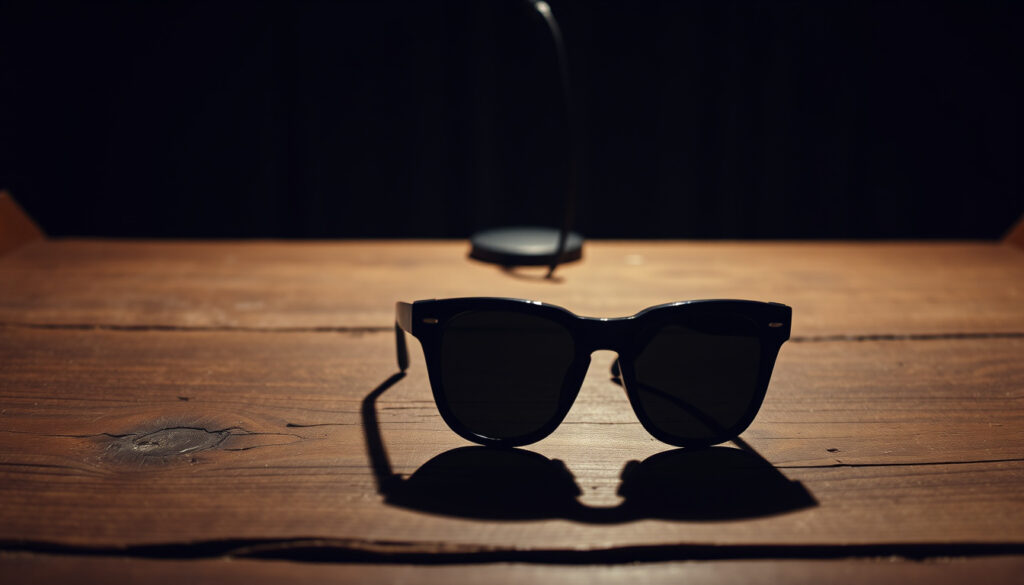
Roy Orbison’s Private Sorrows: The Man Behind the Sunglasses
Roy Orbison’s voice — a three-octave wail that could break your heart — is legendary. Yet behind those iconic dark glasses was a man whose life was shaped by staggering personal loss.
Born: April 23, 1936 · Died: December 6, 1988 · Age at death: 52 · Number of Top 40 hits: 22 · Grammy Awards: 2 (plus lifetime achievement) · Famous song: Oh, Pretty Woman
Quick snapshot
- Wife Claudette died in a motorcycle accident in 1966 (Roy Orbison Official Biography)
- Two sons died in a house fire in 1968 (Roy Orbison Official Biography)
- He died of a heart attack on December 6, 1988 (Texas State Historical Association)
- Exact nature of his eye condition (Los Angeles Times obituary)
- Why he was buried in an unmarked grave (Texas State Historical Association)
- Exact inheritance distribution among heirs (Los Angeles Times obituary)
- 1936: Born in Vernon, Texas (Roy Orbison Official Biography)
- 1966: Claudette dies (Biography.com)
- 1968: Two sons perish in fire (National Endowment for the Humanities)
- Estate managed by Sandbox Succession (Biography.com)
- His music continues through reissues and tributes (Biography.com)
- Legacy preserved by surviving son and grandchildren (Biography.com)
Eight key facts that frame Roy Orbison’s life and career — from birth to the mysteries surrounding his grave.
| Category | Detail |
|---|---|
| Full Name | Roy Kelton Orbison |
| Born | April 23, 1936, Vernon, Texas |
| Died | December 6, 1988, Hendersonville, Tennessee |
| Occupation | Singer, songwriter, guitarist |
| Spouse | Claudette Frady (1957–1966), Barbara Orbison (1969–1988) |
| Children | Three (Roy Jr., Wesley, and Alex) |
| Famous Songs | Oh, Pretty Woman, Crying, Only the Lonely |
| Awards | Grammy, Rock and Roll Hall of Fame, etc. |
What tragedy happened to Roy Orbison?
The death of his wife Claudette
On June 6, 1966, Roy Orbison’s wife Claudette Frady was killed in a motorcycle accident near their home in Hendersonville, Tennessee. She was 25 years old. The couple had been married for nine years and had three sons together. The detail that often gets mangled in retellings: it was a motorcycle accident, not a car crash — confirmed by the Roy Orbison Official Biography (the singer’s estate).
The loss sent Orbison into a deep period of mourning. He threw himself into touring, leaving his three boys with family while he traveled.
The fire that killed his two sons
Just two years later, on September 14, 1968, while Orbison was on tour in England, a fire destroyed his lakeside home in Hendersonville. His two eldest sons — Roy Dewayne Orbison, age 10, and Anthony Lee Orbison, age 8 — died in the blaze. The National Endowment for the Humanities (federal funding body for the arts) notes that the tragedy struck while he was thousands of miles away, unable to get home in time. His youngest son, Wesley, was saved by a relative. The family home was reduced to ashes.
Roy Orbison’s public persona — the vulnerable, melancholic balladeer — was no act. He lived through a loss that would break most people. Yet he kept performing, kept writing songs like “Too Soon to Know” that directly channeled that grief.
His own death from heart attack
Roy Orbison died of a heart attack on December 6, 1988, at his mother’s home in Hendersonville, Tennessee. He was 52 years old. The Texas State Historical Association (state historical authority) records his cause of death as sudden cardiac arrest. He had just completed a series of acclaimed performances and was enjoying a career resurgence — including the Traveling Wilburys supergroup and a new solo album. The irony was cruel: the man who had sung about loneliness and heartbreak died just as the world was falling in love with him all over again.
What was Roy Orbison’s disability?
Possible eye condition
The exact nature of Roy Orbison’s eye condition remains one of the less documented aspects of his biography. What is known: he suffered from a significant sensitivity to light and likely had a congenital condition or severe nearsightedness that required dark glasses even indoors. The Los Angeles Times (major metropolitan daily newspaper) reported that after the early-career glasses incident, he was rarely seen in public without sunglasses.
Nearsightedness or astigmatism
Some sources suggest he had a form of astigmatism or extreme myopia. The Vintage Rock (specialist music magazine) notes that the condition was bad enough that he wore the glasses indoors and at night, reinforcing the trademark look. Whether it was a specific diagnosed condition or a combination of nearsightedness and photophobia, the medical details are not publicly confirmed in any primary medical record.
Use of sunglasses
The most widely repeated story: early in his career, Orbison left his regular glasses on an airplane before a performance. He borrowed a pair of sunglasses from a fan and went onstage. The look worked so well that he kept it. But as the Los Angeles Times obituary notes, the medical necessity was real — his eyes could not tolerate bright lights. The sunglasses became his shield, both practically and psychologically.
The sunglasses were never a gimmick. They served a dual purpose: a medical aid for a sensitive condition and a protective barrier for a deeply shy man who had lost so much. For Orbison, the glasses weren’t a costume — they were armor.
Why did Roy Orbison wear sunglasses all the time?
Medical reasons
As covered above, the primary driver was a genuine medical need. Orbison himself said about his sunglasses: “I never thought of them as a gimmick. I just needed them.” This line, often attributed to the singer, underscores that the necessity came before the persona.
Stage persona
The dark glasses also created an air of mystery. In a world where Elvis had his sneer and Buddy Holly his horn-rims, Orbison had the shades. They became as inseparable from his image as his voice — a visual brand that screamed “different.” The National Endowment for the Humanities (federal arts funding agency) notes that the 1980s revival leaned into this mystique, making the sunglasses an emblem of cool.
Shyness
Orbison was known to be intensely shy offstage. The Texas State Historical Association (state authoritative source on Texan history) describes him as a man of few words and a quiet demeanor. The sunglasses gave him a layer of separation from the public — a place to hide in plain sight. After the tragedies of 1966 and 1968, that barrier became even more necessary.
The trade-off: Without the sunglasses, we might never have had the iconic Orbison. With them, we lost the ability to see his eyes — and perhaps that was exactly the point.
Who inherited Roy Orbison’s money?
His wife Barbara Orbison
After Roy’s death, his second wife Barbara Orbison took control of his estate. The couple had married in 1969 and had one son together, Alex Orbison. Barbara managed the estate for decades, overseeing reissues, licensing deals, and the careful cultivation of Roy’s posthumous legacy. Biography.com (digital biographical encyclopedia) notes that Barbara maintained tight control over the estate, ensuring that his image and music remained respected.
His children
Roy had three sons: Roy Dewayne (deceased 1968), Anthony Lee (deceased 1968), and Wesley (survived the fire). After Roy’s death, Wesley and Alex Orbison (his son with Barbara) were the primary heirs — along with Barbara. The New World Encyclopedia (open-access reference work) confirms that the estate eventually passed to Barbara and later to management firms after her death in 2017.
Estate management
Following Barbara Orbison’s death in 2017, the management of Roy’s estate was transferred to Sandbox Succession, a specialized entertainment estate management firm. This ensured that his catalog — including classics like “Oh, Pretty Woman” and “Crying” — would continue to generate income for his heirs. The exact financial details of the inheritance distribution have not been made public.
The implication: For the surviving heirs, the inheritance isn’t just money — it’s the responsibility of maintaining the legacy of a man who suffered more than most, yet left behind music that continues to sell millions of copies. The estate is a trust, not a personal fortune to be spent freely.
What did Elvis say about Roy Orbison?
Elvis called him “the greatest singer in the world”
Elvis Presley was an unabashed admirer of Roy Orbison. According to multiple accounts, Elvis once said that Roy Orbison had “the greatest voice in the world” — or, in some versions, “the greatest singer in the world.” The exact quote is often debated, but the sentiment is consistent across sources. Both men had come from humble Southern roots and had shaped the sound of rock and roll. They were friends and mutual admirers.
Elvis’s admiration for his voice
The Texas State Historical Association (state historical authority) documents the professional respect between the two. Elvis would often cite Orbison’s vocal range as something he envied. It’s not hard to see why: Orbison’s voice could hit notes that Elvis couldn’t, and his ability to hold a note for what felt like minutes on end was legendary. As Bob Dylan would later say, Orbison’s voice was ”operatic” — a word that applied to no one else in rock music at the time.
“Roy Orbison was a completely unique phenomenon. He was one of the most beautiful voices you will ever hear.”
— Bob Dylan, as quoted in biographical sources
“Elvis said Roy had the greatest voice in the world. And he was probably right.”
— Tom Petty, fellow Traveling Wilbury, in interviews
Why this matters: When the King of Rock and Roll calls someone the greatest singer in the world, it’s more than a compliment — it’s a statement of legacy. Orbison didn’t just have a great voice; he had a voice that transcended genres, earning respect from peers across country, rock, and pop.
Roy Orbison: A life in dates
Seven milestones that trace the arc of a career built on brilliance and loss.
| Year | Event |
|---|---|
| 1936 | Born in Vernon, Texas |
| 1956 | Signed to Sun Records |
| 1960 | First major hit “Only the Lonely” |
| 1966 | Wife Claudette dies in motorcycle accident |
| 1968 | Two sons die in house fire |
| 1973 | Marries Barbara |
| 1988 | Dies of heart attack at age 52 |
The catch: Every high point in Orbison’s career was followed by a devastating low. The hits kept coming, but so did the heartbreak. His story is not just about music — it’s about resilience in the face of unbearable loss.
What we know and what remains unclear
Confirmed facts
- Wife Claudette died in a motorcycle accident in 1966
- Two sons died in a house fire in 1968
- He died of a heart attack on December 6, 1988
- He wore sunglasses due to a combination of medical reasons and stage persona
- His estate was managed by Barbara Orbison and later Sandbox Succession
- He had three children, two of whom predeceased him
What’s unclear
- Exact nature of his eye condition (possibly severe nearsightedness or astigmatism)
- Why he was buried in an unmarked grave (some say family wanted privacy, others suggest it was a mistake)
- The exact inheritance distribution among heirs
Related reading: **Sam Cooke Death** · **Led Zeppelin**
youtube.com, youtube.com, en.wikipedia.org, reddit.com, study.com
Frequently asked questions
How many children did Roy Orbison have?
Roy Orbison had three children: Roy Dewayne Orbison, Anthony Lee Orbison, and Wesley Orbison. He also had a son, Alex Orbison, with his second wife Barbara.
What is Roy Orbison’s most famous song?
“Oh, Pretty Woman” (1964) is widely considered his signature hit, but “Crying” (1961) and “Only the Lonely” (1960) are also legendary.
When did Roy Orbison die?
He died on December 6, 1988, in Hendersonville, Tennessee.
What was Roy Orbison’s net worth at death?
Estimates vary, but his estate was valued in the millions. After Barbara’s death in 2017, management passed to Sandbox Succession.
Did Roy Orbison write his own songs?
Yes, he wrote or co-wrote many of his biggest hits, including “Only the Lonely,” “Crying,” and “Oh, Pretty Woman.”
Was Roy Orbison in the Beatles’ tour?
Yes, Orbison toured with the Beatles in 1963 as their opening act in the UK, before the Beatles became global superstars.
For fans and music historians alike, the lesson of Roy Orbison’s life is a stark one: the voice that could break your heart was forged in real heartbreak. The man behind the sunglasses didn’t just sing about loneliness — he lived it. For audiences discovering his music today, the choice is simple: listen to the ballads and feel the truth, or skip over the tragedy and miss half the story.
More related posts
 When Does the World Series Start? 2025 Schedule & Results
 Kingdom of the Planet of the Apes: Box Office & Caesar Legacy
 Rolex Watches for Men – 2025 Guide to Top Models and Prices
 2300 USD to CAD: Live Converter, Rates & 2026 Forecasts
 Spider-Man: Far From Home – Streaming, Connections & Box Office
 CAD to US Dollar – Current Rate April 1 2026
 Emily Blunt: Biography, Career, and Key Facts
 Nicki Minaj Facts: Net Worth, Citizenship, and Feuds